Introduction
In industrial scenarios, especially for outdoor metal storage equipment, powder coating has gradually become the mainstream process, thanks to its superior mechanical performance, weather resistance, and environmental advantages. Below we break down the core differences between the two coating methods, highlighting why powder coating is the preferred choice for high-quality metal storage solutions.
Core Differences: Powder Coating vs. Ordinary Spray Paint
1. Raw Materials & Physical Form
Ordinary Spray Paint: A liquid coating mixture of resin, chemical solvents, and color pigments. It contains volatile chemical solvents that release harmful substances during and after construction.
Powder Coating: Made of pure solid resin powder with zero liquid solvents. It is a fully solid, eco-friendly coating material with no volatile components.
2. Construction & Adhesion Principle
Ordinary Spray Paint: Adopts traditional air pressure spraying. The liquid paint adheres to the workpiece surface simply through air flow pressure, with physical adhesion only. The bonding force is weak and unstable.
Powder Coating: Uses professional electrostatic spraying technology. The powder particles are charged and firmly adsorbed on the grounded metal surface through electrostatic attraction. This electrostatic combination delivers far stronger adhesion and ensures full coverage on every corner of metal parts.
3. Coating Thickness & Surface Fullness
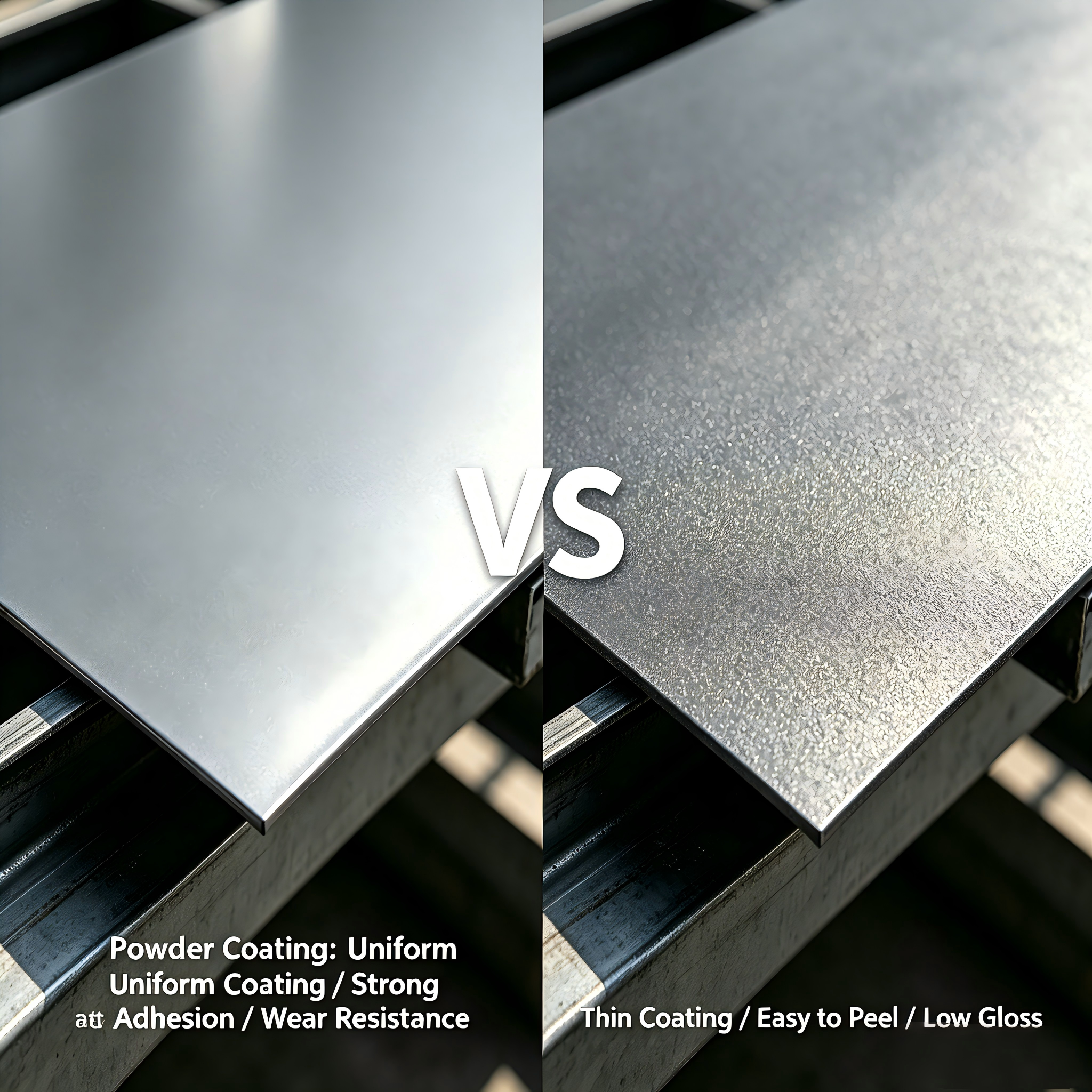
Ordinary Spray Paint: Forms a thin coating of 20–60μm. Although the surface is delicate, the coating is thin and fails to form a thick protective layer.
Powder Coating: Features a thick, uniform coating of 60–120μm. The thick and full coating forms a solid protective barrier on the metal surface, providing comprehensive anti-damage protection.
4. Wear Resistance & Impact Resistance
Ordinary Spray Paint: The paint film is soft with average adhesion. It is easy to scratch, wear off, or peel off when encountering friction, collision, or daily abrasion, resulting in exposed metal surfaces.
Powder Coating: The cured powder coating layer is tough and rigid, with excellent wear resistance and anti-impact performance. It resists daily friction, accidental bumps, and mechanical abrasion, no peeling or scratching easily, and maintains complete coating integrity for a long time.
5. Rust Prevention, Weatherability & Corrosion Resistance
Ordinary Spray Paint: Poor outdoor adaptability. It fades, chalks, peels, and blisters easily under long-term sunlight, rain, and humid air. It cannot effectively resist acid and alkali corrosion, leading to metal rust and shortened product service life.
Powder Coating: Boasts outstanding weather resistance, rust resistance, and acid-alkali corrosion resistance. It can withstand long-term outdoor exposure, rain erosion, and humid industrial environments, effectively preventing metal oxidation and rust, and greatly extending the service life of metal products.
6. Appearance & Texture Performance
Ordinary Spray Paint: Delicate and smooth surface, supporting high-gloss, gradient, and various complex color effects, suitable for decorative-only scenarios.
Powder Coating: Presents a high-grade matte and frosted texture with uniform color and strong texture. Although it focuses on solid color matching, it has better overall flatness and consistency, more in line with the industrial minimalist and durable aesthetic.
7. Environmental Protection & Safety
Ordinary Spray Paint: High VOC emissions with pungent odors and volatile harmful gases during construction, causing environmental pollution and potential health risks to workers.
Powder Coating: Zero volatile substances, odorless and non-toxic. The excess powder can be fully recycled and reused, which is environmentally friendly, safe, and meets international industrial environmental protection standards.
8. Cost & Application Suitability
Ordinary Spray Paint: Low process cost and flexible for small-batch, tiny decorative parts with complex color requirements, but not suitable for heavy-duty industrial use.
Powder Coating: Slightly higher in process and equipment cost, but suitable for mass production of industrial metal parts. Its long-term durability and low maintenance rate make it more cost-effective in long-term use.
Why Our Storage Storage Boxes Adopt Powder Coating Process
As a professional manufacturer of metal storage boxes, we fully understand that storage equipment needs to withstand long-term stacking, frequent handling, indoor humid storage, and outdoor placement in some scenarios.
To ensure the premium quality and long service life of our products, all our metal storage boxes adopt electrostatic powder coating as the standard surface finishing process, abandoning the traditional ordinary spray paint process.
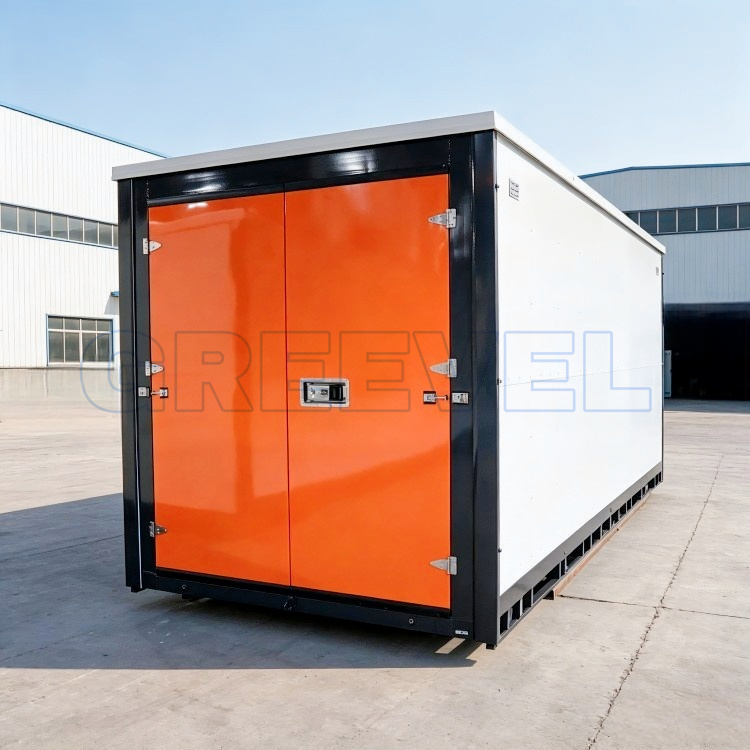
Through professional powder coating treatment, our warehouse storage boxes gain superior wear resistance, scratch resistance, and impact resistance, effectively avoiding paint peeling and surface damage during daily handling and stacking. More importantly, the thick powder coating layer provides excellent outdoor rust prevention and anti-corrosion performance, allowing our storage boxes to adapt to harsh environments such as warehouses, workshops, and open-air storage yards, with stable performance and no easy rusting or fading.If you are looking for durable, rust-proof, high-quality metal warehouse storage boxes for your industrial storage solution, welcome to browse our product page to check detailed specifications and customized solutions!
