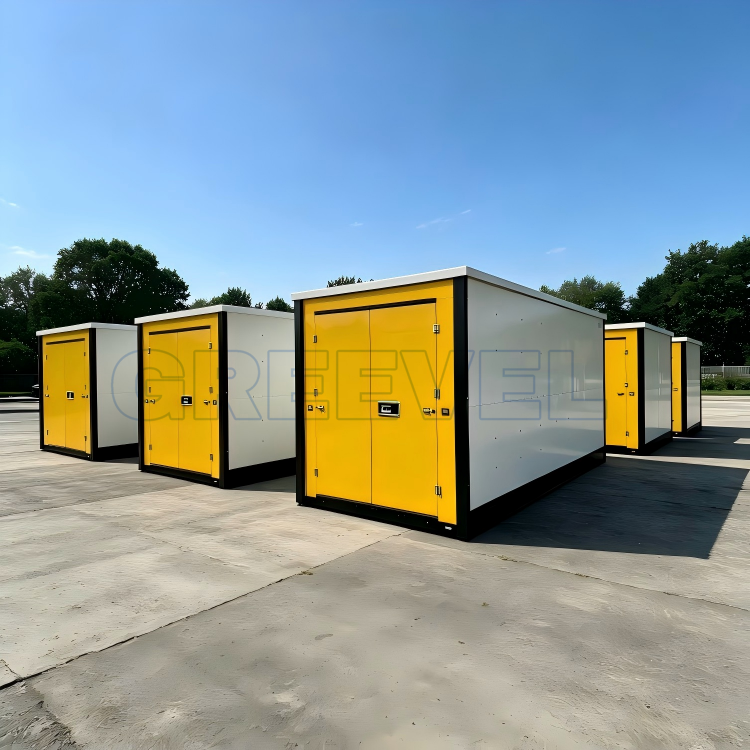
For US self-storage operators, portable storage containers can be an effective way to expand storage capacity, support outdoor storage operations, and respond to growing customer demand.
Buying directly from a Chinese manufacturer can also provide access to flexible customization, manufacturing capacity, and different container configurations.
However, purchasing portable storage containers internationally is very different from simply comparing prices online.
Before placing an order, US buyers should understand the product specifications, customization requirements, production process, drawings, shipping arrangements, communication process, and after-sales support.
A real project with StoreMore LLC, an outdoor self-storage operator in Weatherford, Texas, provides a useful example of how a US buyer can work with a Chinese manufacturer from the initial inquiry through production, shipping, delivery, and final assembly.
This article explains the key points US self-storage operators should consider before buying portable storage containers from China.
One of the most common mistakes when sourcing storage containers internationally is asking only:
“What is your price for a container?”
The final price depends on many factors, including size, quantity, structure, doors, materials, customization, packaging, and shipping requirements.
Before requesting a quotation, US buyers should clearly define:
This information allows the manufacturer to understand the actual project instead of providing a generic product price.
In the StoreMore Texas project, the customer had already been using portable storage containers for an outdoor self-storage facility and provided detailed specifications and quantity requirements when contacting Greevel.
The key lesson for US buyers: the more clearly you define your application and requirements, the more accurate your quotation and production plan can be.
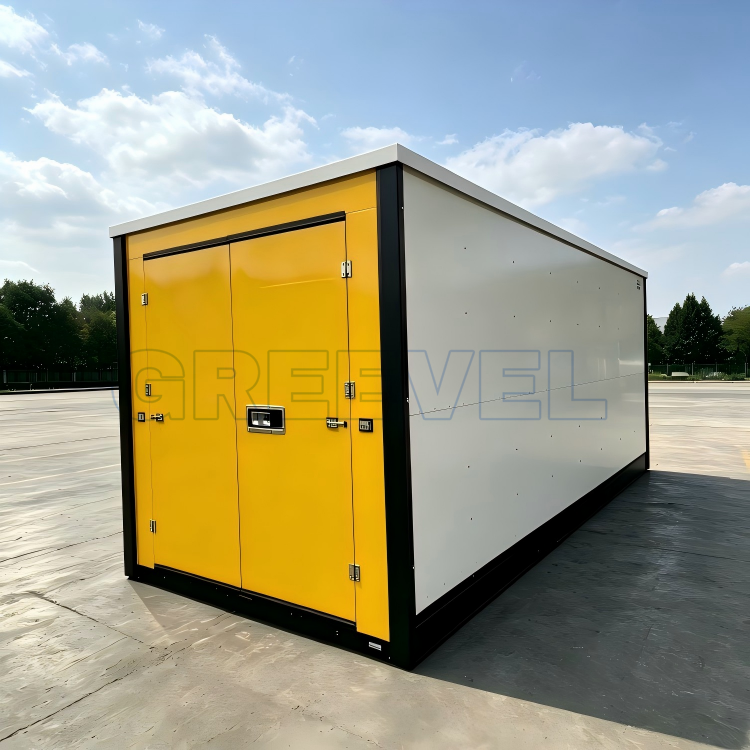
A low factory price does not necessarily mean a lower total project cost.
When comparing Chinese portable storage container manufacturers, US buyers should look beyond the product price and evaluate the complete purchasing process.
Important questions include:
For an outdoor self-storage operator, a container that does not match the intended application can create additional costs after arrival.
For this reason, product suitability and supplier reliability should be evaluated together with price.
Once the supplier is selected, the next important step is specification confirmation.
A professional purchasing process should make sure that both sides have the same understanding of the product before manufacturing begins.
For example, a buyer may need to confirm:
These details should be confirmed in writing.
For Greevel's StoreMore project, the initial inquiry process included confirming the buyer's company information, destination port, contact information, size, purchase quantity, detailed specifications, and intended use before preparing the quotation.
This approach reduces misunderstandings before production begins.
For customized portable storage containers, drawings are an important communication tool between the buyer and manufacturer.
A product description or quotation may not communicate every structural detail clearly.
A production drawing can help both sides confirm:
In the StoreMore project, Greevel prepared the production drawings after receiving the deposit. The customer reviewed and approved the drawings before formal production scheduling.
For US buyers, this is an important checkpoint.
Because changing a requirement after production has started can be more difficult than correcting it before manufacturing.
Before approving the drawing, buyers should carefully check whether the design matches the intended application and agreed specifications.
A clear drawing approval process helps turn a sales discussion into a clearly defined manufacturing project.
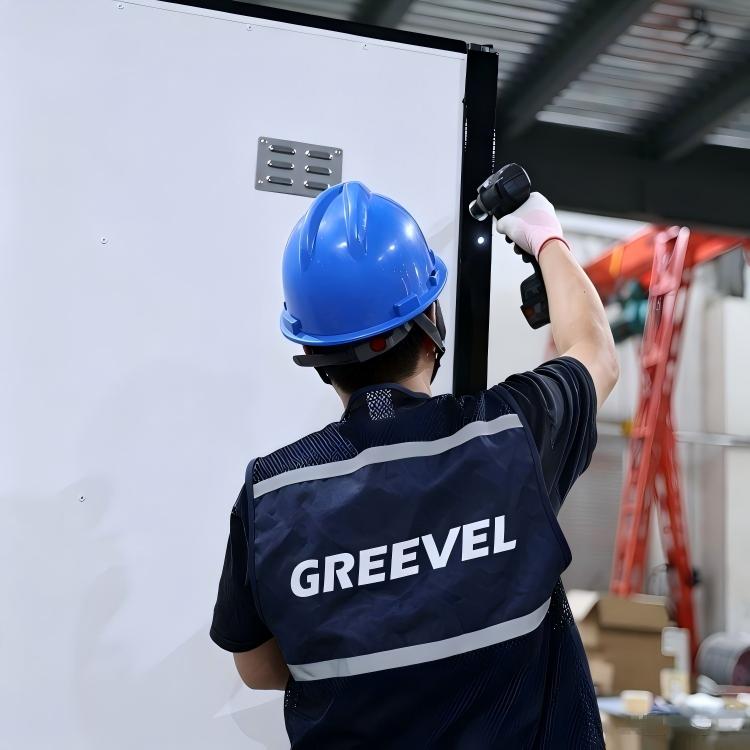
International buyers cannot simply walk into a factory to check production.
That makes production communication particularly important.
Before placing an order, US buyers should ask:
How will I know what is happening with my order after production starts?
A reliable communication process may include:
For the StoreMore project, Greevel provided production updates at key stages, including when welding was completed and when assembly was completed. The estimated ready-to-ship date was also provided so the customer could make arrangements with the freight forwarder.
For a US self-storage operator planning facility expansion, this information can be useful for coordinating transportation, site preparation, labor, and installation.
The purchasing process does not end when production is completed.
International transportation needs to be planned in advance.
US buyers should clarify:
In the StoreMore Texas project, the nearest port was Houston, Texas. Greevel prepared an RTS document when the order was ready and allowed the customer to use its own freight forwarder. Alternatively, Greevel could check current freight rates and arrange shipping.
This creates flexibility for buyers with existing logistics partners while still providing an option for buyers who want additional shipping support.
For US self-storage operators purchasing multiple units, shipping efficiency can have a significant impact on the overall project economics.
This is particularly important when purchasing portable storage containers from overseas.
Instead of evaluating only the price of one finished unit, buyers should also consider:
How many units can be efficiently transported in one shipment?
Flat-pack or foldable designs can help optimize transportation and reduce the space required during international shipping, depending on the specific product structure.
Therefore, before placing a large order, ask the manufacturer about:
The objective is to evaluate the landed project cost, not simply the factory unit price.
For overseas buyers, photos and documentation can provide important visibility into the order before it leaves the factory.
Before shipment, buyers can request:
In the StoreMore project, Greevel provided packaging and loading photos after shipment arrangements were completed.
This type of documentation helps create a clearer connection between the product approved during the purchasing process and the goods actually shipped.
Another important question for US buyers is:
What happens after the shipment reaches the United States?
Receiving an international shipment is only one stage of the project.
The buyer may still need to:
For this reason, after-sales communication should be discussed before ordering.
In the StoreMore project, Greevel updated the customer on the estimated arrival time after vessel departure and arranged the telex release in advance. The customer was also asked to record photos and videos during unloading, unpacking, assembly, and final assembly as part of the after-sales process.
This gives the manufacturer an opportunity to understand how the products perform during actual installation.
The StoreMore LLC project demonstrates why the purchasing process should be viewed as a complete workflow rather than a simple product transaction.
StoreMore LLC is an outdoor self-storage facility located in Weatherford, Texas. The company first collaborated with Greevel on May 30, 2024. The customer contacted Greevel through Alibaba and provided detailed requirements for portable storage containers.
The cooperation followed eight main stages:
Inquiry → Quotation → Contract → Drawing Approval → Production → Shipping → Container Arrival → Customer Feedback
This process gave both sides clear checkpoints throughout the project.
StoreMore provided its project requirements, specifications, and quantity information.
Greevel confirmed the buyer and product information before preparing the official quotation.
After the project details were finalized, the contract was signed and the deposit was arranged.
Greevel prepared production drawings for customer review and approval.
Production progress was communicated at important stages, including welding and assembly.
Greevel prepared the RTS documentation and supported the shipping process.
The customer received updates regarding vessel departure and estimated arrival.
After assembly, the customer was satisfied with the containers. Greevel's case record states that attention was paid to the previously confirmed details to ensure the shipment met and exceeded the customer's expectations.
The value of this case is not simply that the products were delivered.
It shows how a US self-storage operator can work with a Chinese manufacturer through a structured purchasing process.
Before placing an order, US buyers can use the following checklist.
A manufacturer that can answer these questions clearly is easier to evaluate than a supplier that only provides a product price.
For US self-storage operators, purchasing portable storage containers from China should not be treated as a simple transaction between a buyer and a factory.
It is a project involving:
Product Design + Manufacturing + Quality Control + Communication + Logistics + Delivery + After-Sales Support
A suitable supplier should therefore be able to participate in the entire process.
Greevel's cooperation process reflects this approach, covering inquiry and specification confirmation, quotation, contract, drawing approval, production updates, shipping coordination, delivery tracking, and post-arrival communication.
This is particularly important for self-storage operators who may purchase multiple units and use them as part of a long-term storage business.
Buying portable storage containers from China can be a practical sourcing option for US self-storage operators, but successful international procurement requires more than finding a competitive factory price.
The key is to establish a clear process from the beginning:
Define Your Requirements → Compare Suppliers → Confirm Specifications → Approve Drawings → Monitor Production → Plan Shipping → Receive & Assemble → Complete Inspection
The StoreMore LLC project in Texas demonstrates how this process can work in a real US self-storage application.
For buyers considering their first international container order, the most important question should not simply be:
“How much does the container cost?”
A better question is:
“Can the manufacturer provide a complete and transparent process from my initial inquiry to final delivery?”
That is where the difference between simply buying a product and building a reliable supply relationship becomes clear.
Greevel is a China-based manufacturer specializing in portable storage containers and customized storage solutions for international customers.
Rather than offering only standard products, Greevel works with customers to confirm specifications, prepare production drawings, coordinate manufacturing, provide progress updates, support shipping arrangements, and communicate throughout the delivery process.
For self-storage operators, moving and storage companies, rental businesses, and storage distributors, the goal is to provide storage container solutions based on actual business requirements.
From product specifications to international delivery, Greevel supports customers through the complete purchasing process.